In today’s fast-evolving manufacturing world, being “connected” is no longer a luxury—it’s a necessity for survival and scale.
While large enterprises may have the budget to pursue smart factory transformations at scale, small and mid-sized manufacturers are proving that connectivity isn’t just about size—it’s about strategy. And the results? Reduced downtime, smarter planning, better customer experiences, and data that drives real-time decisions.
But this digital leap doesn’t start with flashy tech.
It starts with connecting the dots between your machines, data, people, and processes—with the right IT services manufacturing approach.
This blog breaks down:
 What a “connected factory” actually means for SMB manufacturer
How cloud, IoT, and data integration work together
Practical use cases that deliver ROI
What a “connected factory” actually means for SMB manufacturer
How cloud, IoT, and data integration work together
Practical use cases that deliver ROIThe Connected Factory Isn’t Just About Sensors and Screens
It’s about:
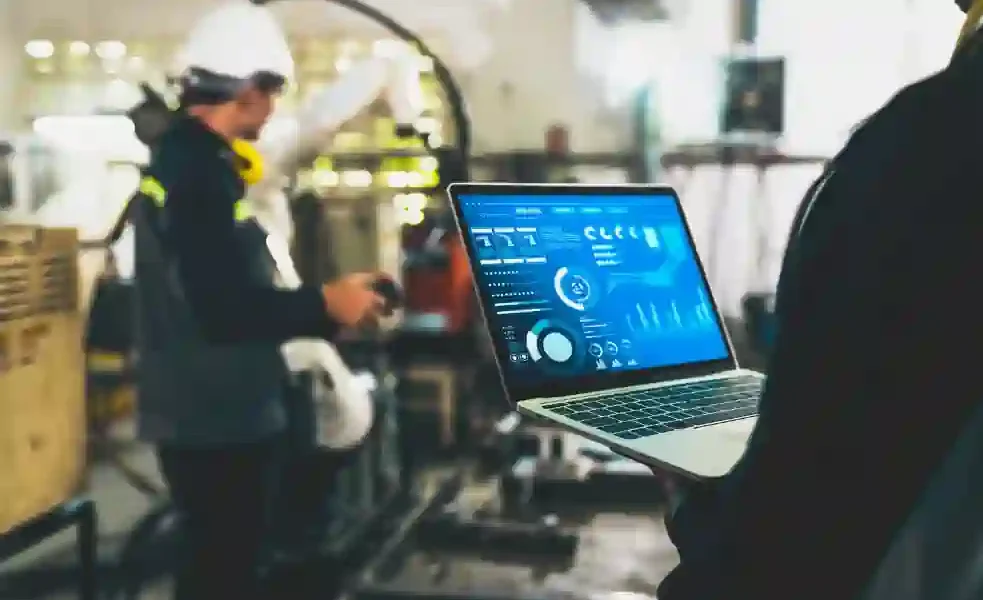
 Accessing live machine data from your phone
Giving supervisors a unified dashboard for shift performance
Letting maintenance act before a machine fails
Enabling quality teams to trace every component digitally
Accessing live machine data from your phone
Giving supervisors a unified dashboard for shift performance
Letting maintenance act before a machine fails
Enabling quality teams to trace every component digitallyIn short, it’s about eliminating blind spots—so your team can operate smarter, faster, and with less friction.
Here’s the shift manufacturers are making:
| From | To |
| Manual logs & spreadsheets | Real-time digital dashboards |
| Reactive maintenance | Predictive alerts and monitoring |
| Paper-based QA | Connected, auditable quality workflows |
| Guesswork scheduling | Data-driven production planning |
| Siloed systems | Integrated, collaborative platforms |
IT services manufacturing is no longer a side function—it’s the engine driving these changes.
Cloud, IoT, and Data: The 3 Pillars of the Connected Factory
Think of them as the digital nervous system of your plant:
☁️Cloud: The Access Layer
Stores production data securely
Delivers insights via mobile/desktop dashboards
Enables multi-site collaboration
Scales with your needs—no infrastructure overhead🌐 IoT (Internet of Things): The Sensing Layer
Gathers real-time data from machines, lines, tools, or even forklifts
Tracks vibration, temperature, speed, cycles, and more
Sends alerts when thresholds are crossed
Bridges old equipment to new digital systems📊 Data Integration: The Intelligence Layer
Combines inputs from MES, ERP, QA, and sensors
Applies logic, calculations, and AI to draw insights
Drives workflows, escalations, and predictions
Powers continuous improvementIoT captures, Cloud stores & visualizes, and Data makes it actionable.
Connected Factories in Action: 6 Use Cases that Drive Results
Let’s look at real-world ways small and mid-sized manufacturers are using cloud, IoT, and data to move the needle:
✅ Real-Time Production Monitoring
The Challenge: Line supervisors didn’t know production rates until end-of-shift reports.
The Solution: IoT sensors send live cycle counts to a cloud dashboard, accessible via tablet.
The Outcome:
17% increase in OEE
Faster intervention when issues arise
Visibility even when working remotely✅ Predictive Maintenance
The Challenge: Machines broke down without warning, halting production.
The Solution: Vibration sensors + ML models flag early signs of wear.
The Outcome:
42% reduction in unplanned downtime
Lower maintenance costs
Safer working conditions ✅ Connected Quality Assurance
The Challenge: Manual checks and handwritten logs made quality non-compliant and error-prone.
The Solution: Operators input results into tablets; failed checks trigger automatic rework tasks.
The Outcome:
90% reduction in QA errors
ISO-compliant traceability
Faster customer audits✅ Energy and Resource Monitoring
The Challenge: Energy costs and resource waste were invisible.
The Solution: IoT energy meters monitor water, air, gas, electricity usage in real time.
The Outcome:
12% drop in utility costs
Identification of leaks and waste
Improved sustainability ratings✅ Digital Work Instructions & Operator Support
The Challenge: Training new operators took too long, and steps were skipped.
The Solution: Cloud-based instructions with images, videos, and live feedback.
The Outcome:
40% faster training
21% reduction in defects from incorrect setup
Standardized processes across shifts✅ Smart Scheduling and Capacity Planning
The Challenge: Planning was done in Excel, often off from reality.
The Solution: Real-time data feeds planning software, automatically adjusting based on run rates.
The Outcome:
Better on-time delivery
Lower WIP inventory
Less firefightingWhy Mid-Sized Manufacturers Can’t Wait to Connect
Some think “connected factories” are only for enterprises with big budgets.
Not anymore.
Thanks to affordable IoT devices, flexible cloud platforms, and scalable IT services, even a 50-person plant can benefit from digital manufacturing.
Here’s what’s fueling adoption among small and mid-sized manufacturers:
| Driver | Impact |
| Rising customer expectations | Need for traceability, speed, and visibility |
| Skilled labor shortage | Digital tools help new workers succeed faster |
| Cost pressures | Real-time optimization reduces waste |
| Regulation | Digital records make compliance easier |
| Sustainability goals | Data shows where to reduce energy and emissions |
Steps to Build a Connected Factory—Without Overwhelm
You don’t have to rip and replace.
You don’t need a year-long roadmap.
You need a clear, iterative path with measurable wins.
Here’s how to get started:
Map the Gaps
Where do you lack visibility?
What’s manual, slow, or error-prone?Prioritize by ROI
Focus on one high-impact area (e.g., downtime or energy)Design a Small Pilot
Choose one machine, line, or workcell
Integrate sensors, dashboards, or mobile appsDeploy and Validate
Train users
Track KPIs (like uptime or yield)
Get feedback from frontline teams Scale Gradually
Expand to more equipment, sites, or workflows
Integrate with ERP, QA, or planning systemsEvolve with Data
Use real-world results to guide what’s next
Build your connected ecosystem step by stepReal Result: A Mid-Sized Sheet Metal Manufacturer
Before:
No real-time view of production
Breakdowns caused 10+ hours/month in downtime
Quality issues took weeks to traceAfter Partnering with Infysion:
IoT sensors added to 3 press machines
Power BI dashboards fed by live data
Integrated QA forms with barcode traceabilityResults (in 5 months):
33% less downtime
100% traceability for auditsWhy Infysion? Built for Manufacturers Who Need Results
Infysion Technologies isn’t a software reseller. We’re problem-solvers with deep roots in manufacturing systems, cloud infrastructure, and industrial IoT.
Our specialty: Helping small and mid-sized manufacturers connect their factories in practical, powerful ways—without blowing the budget or disrupting operations.
Our approach includes:
Business-first diagnostics
Custom IoT design and development
Dashboards and analytics that deliver insight—not overload
Integration with your existing systems (ERP, QA, MES)
Full lifecycle support—from pilot to scaleWhether you’re starting small or expanding an existing initiative, Infysion helps make your digital journey connected, clear, and ROI-driven.